
India's Most Loved Employee Benefits Platform for SMEs
Affordable, accessible and attainable Group Insurance plans
- 100,000+
- Lives Covered
- 100+
- Clients Served
- 10%
- Claims Success Ratio
- 0.0★
- Google Rating
Organisations that trust Healthysure






















The Healthysure Advantage

24/7 Claims
Experience hassle-free and paperless claims filing

Dedicated Management
Get an account manager for all your needs

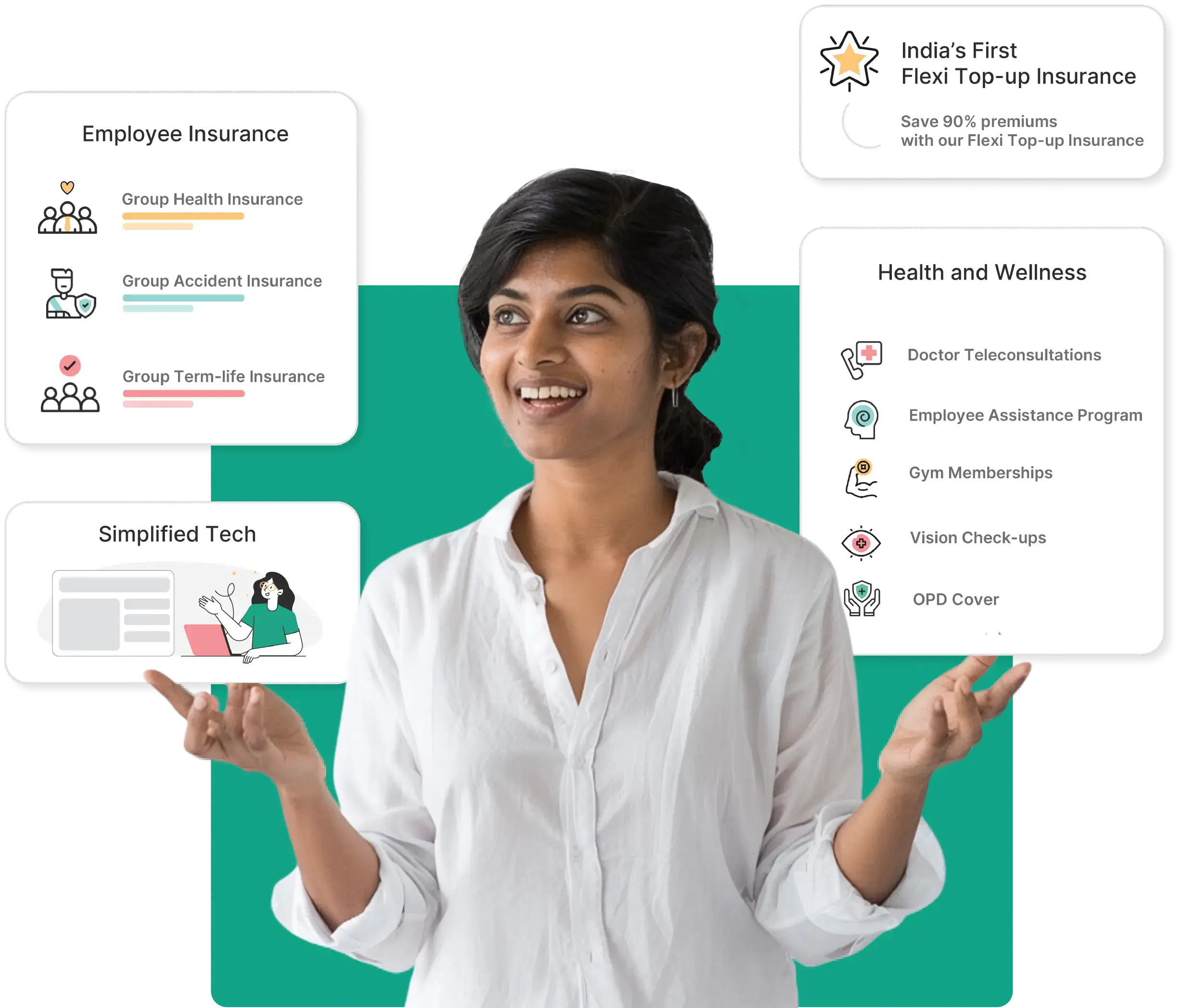
Industry-first FTI plans
Upgrade health covers with up to 90% savings

Technology Dashboard
Manage policy benefits, members & track claims
A full-stack Employee Healthcare Platform
Empower your team with our 360 coverage that ensure proactive, corrective and reactive protection.
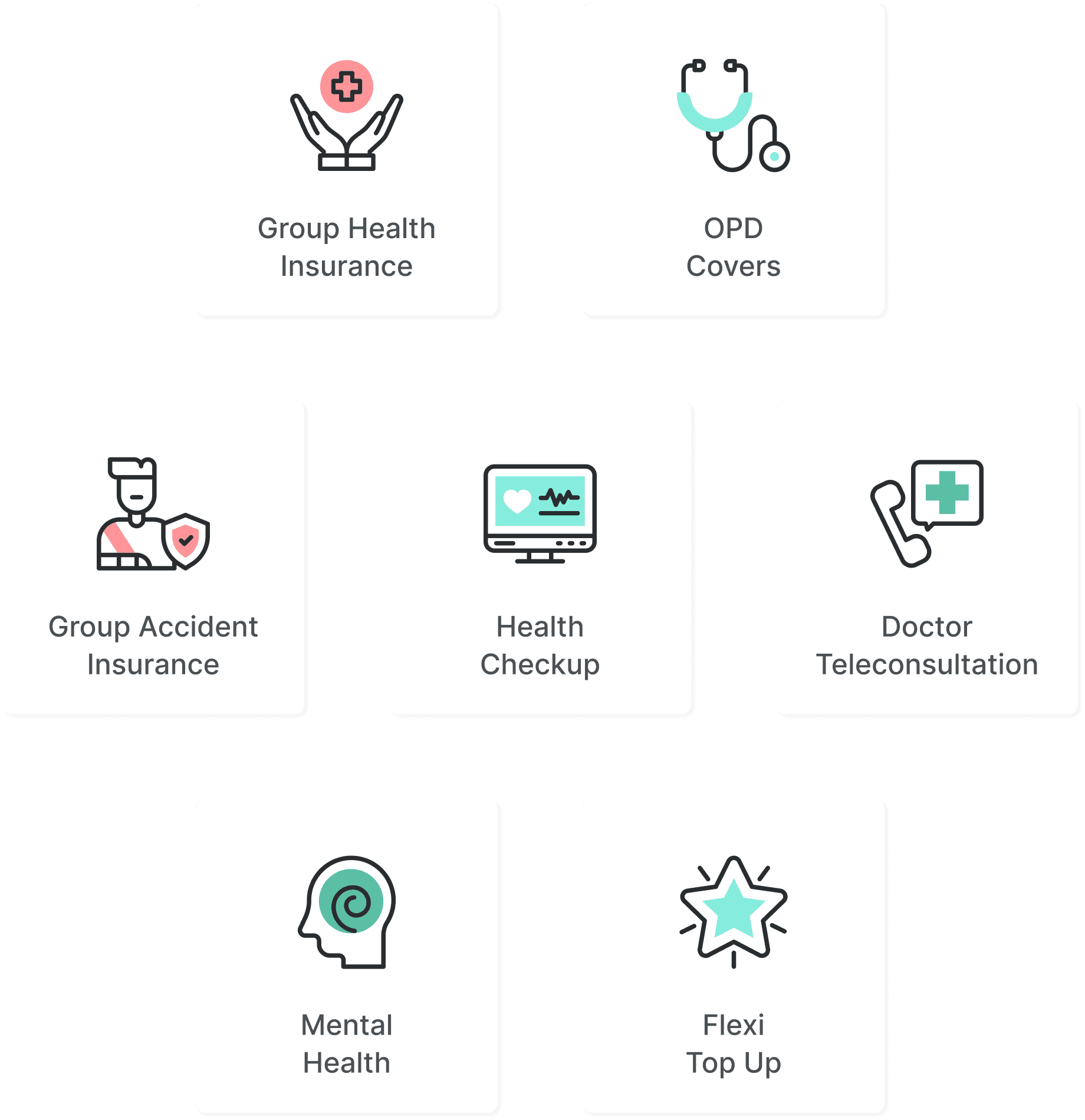
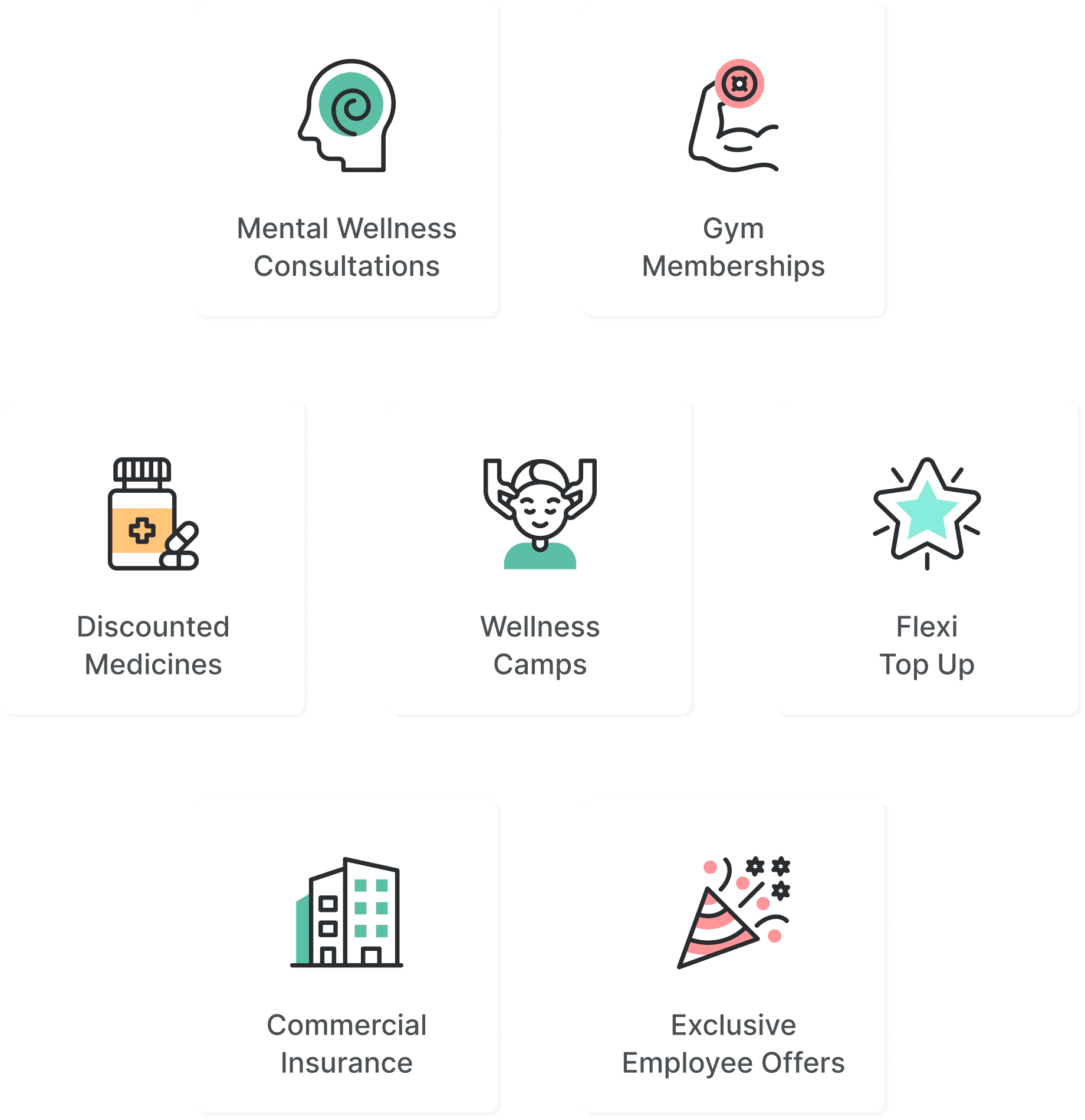
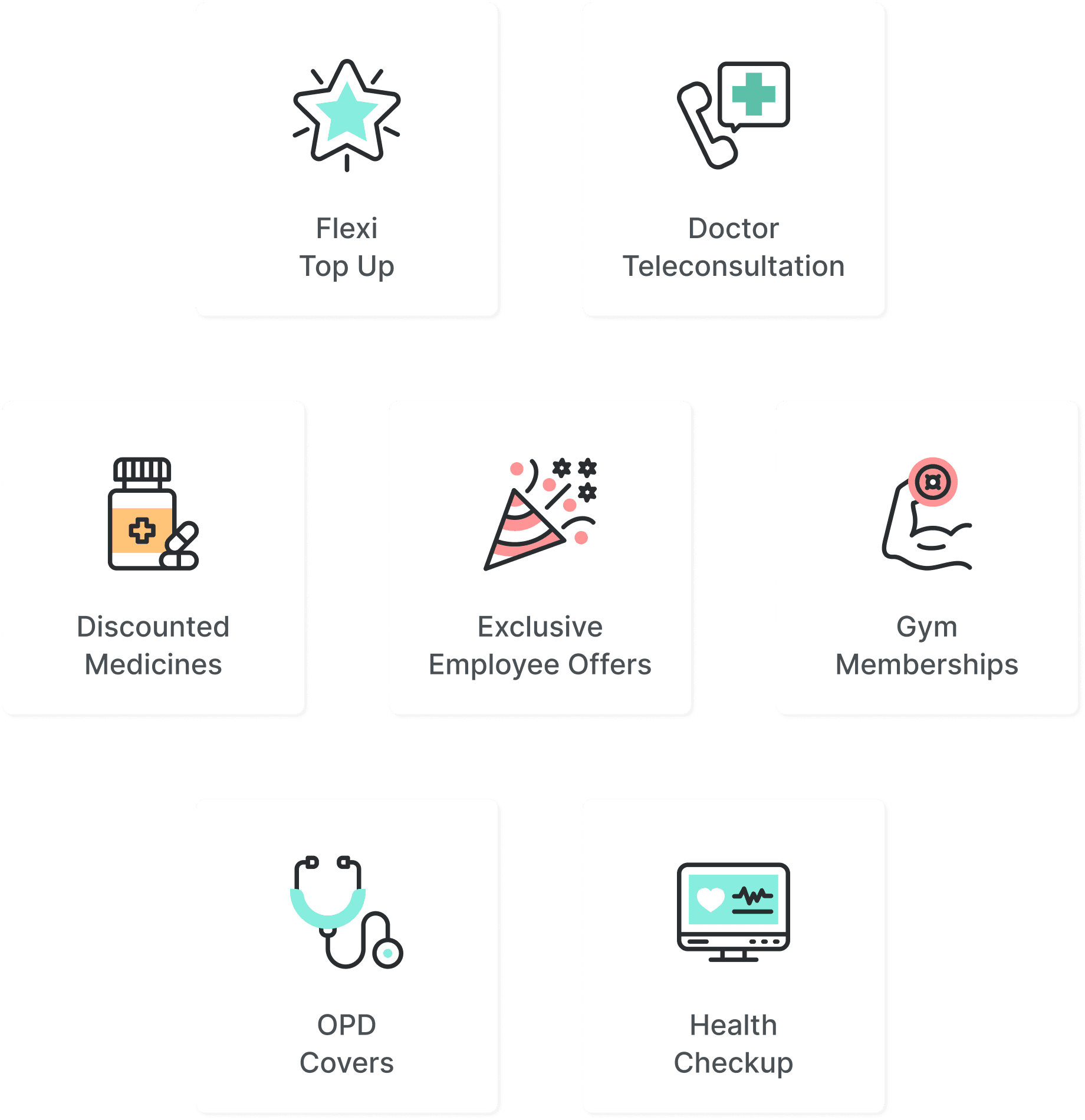
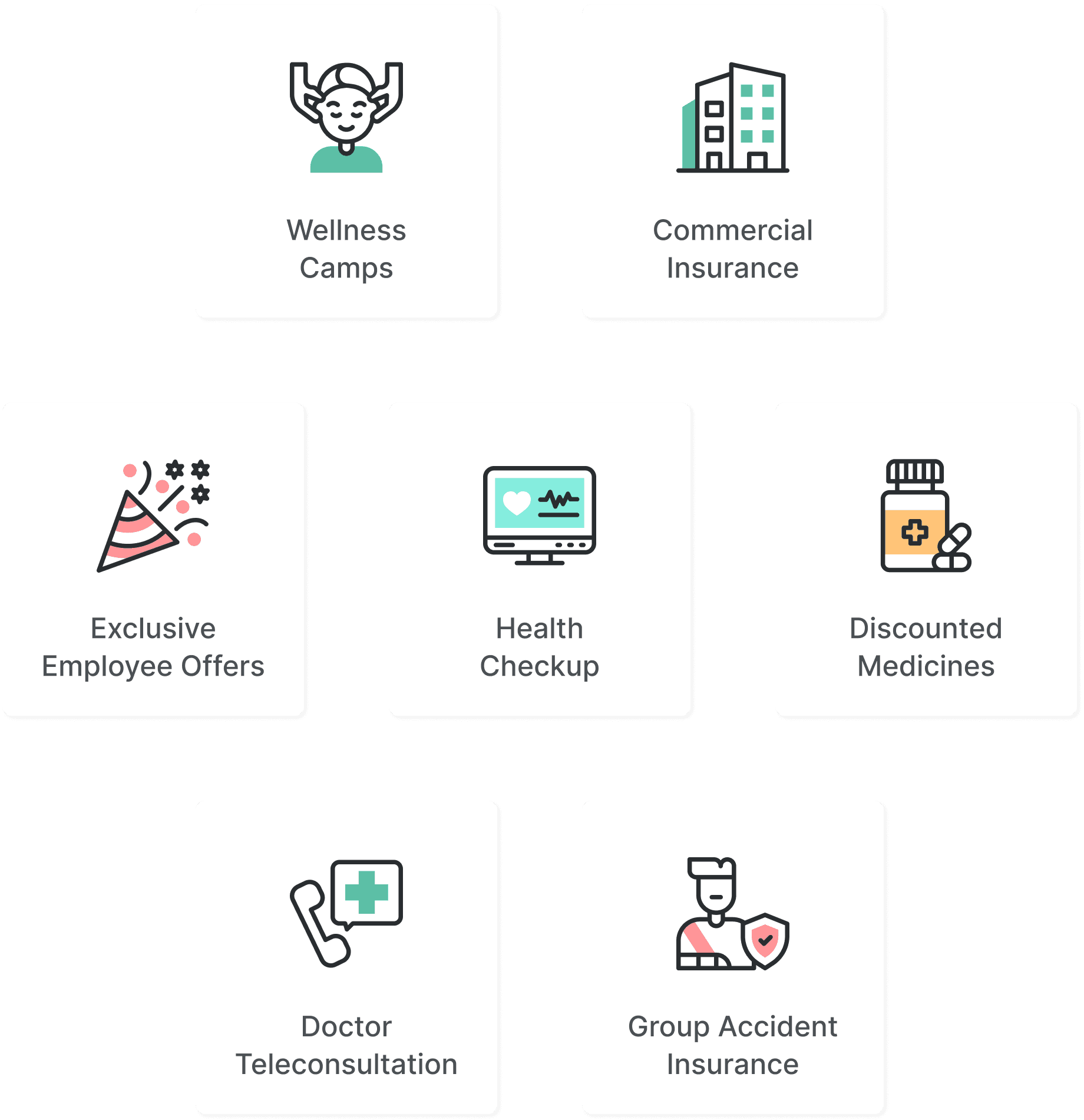
Benefits included in the platform
- Group Health Insurance
- Group Accident Insurance
- Group Term-life Insurance
- OPD Covers
- Health Checkup
- Doctor Teleconsultation
- Mental Health
- Mental Wellness Consultations
- Flexi Top Up
- Wellness Camps
- Gym Memberships
- Discounted Medicines
- Exclusive Employee Offers
- Commercial Insurance
Driven by our customers’ needs
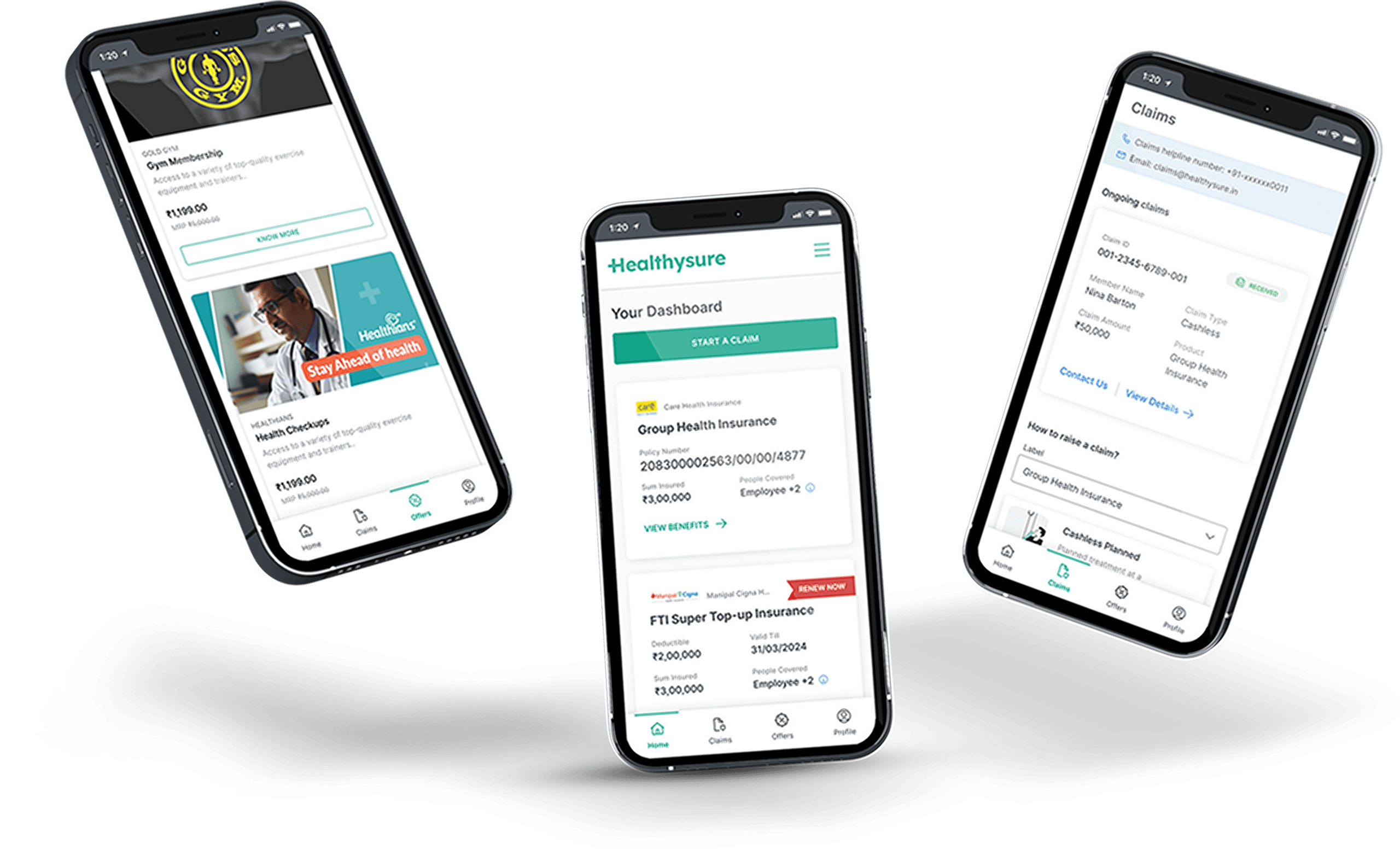
Bringing the Healthysure experience to your pocket
- Effortless access to coverage options
- 24/7 claims tracking and support
- Exclusive discounts and reward programs
- Instant notifications and updates
Download the Healthysure app now!


and the media has been talking a lot about us!






Frequently Asked Questions
What expenses are covered under a group health insurance policy?
A group health insurance covers the following expenses :
- In-patient hospitalization (i.e. Min 24 hours hospitalisation)
- Day care treatments
- Maternity expenses incl. new born expenses from day one
- Pre and post hospitalization covering medicines, lab tests & doctor consultations
- Ambulance expenses For more details about the expenses covered, you can view your policy handguide
Does group health insurance have waiting period?
No, group health insurance policy is usually not subject to waiting period be it for any Pre-Existing Disease condition (PED) e.g.: Diabetes, Blood Pressure, Heart disease, etc., or Specified Diseases e.g.: Sinus, Knee replacement, Cataract, etc unlike retail insurance. However, this might change if your organisation has opted for a waiting period. For more clarification, you can view your policy handguide.
What if I undergo treatment/surgery under a Day Care facility and get discharged the same day?
Due to technological and medical advancements, certain treatments and surgeries can be administered and conducted within few hours without getting hospitalised. Examples include chemotherapy, cataract, kidney stone removal, dialysis, etc. These are called as Day care procedures and will get covered under the policy even if you get discharged on the same day.
Is COVID-19 covered under group health insurance?
Yes, COVID -19 is covered under the policy if you are hospitalised for minimum 24 hours and the SP02 level at the time of hospitalisation was less than 90.
Are quarantine expenses for COVID-19 covered under the group health insurance?
No, the quarantine expenses like hotel isolation, RTPCR/other diagnostic reports, medicines, doctor consultation, etc would not be covered under the policy.
Does group health insurance cover OPD expenses such as doctor consultations or lab tests?
Most insurance policies do not cover OPD expenses like doctor consultation, pharmacy, lab test. But any such expenses incurred 30 days before or 60 days after hospitalisation will be covered under the policy. These expenses are termed as Pre and post hospitalization expenses.
Is dental treatment covered under the group policy?
No, any type of dental treatment/surgeries will not be covered under the policy. However, dental treatment due to disease/injury will be covered.
What is policy e-card and what are its uses?
A policy e-card is a health insurance identity proof that holds your personal details, policy information and financial coverage under a health insurance plan. It offers cashless payment options to pay for your medical bills arising from hospitalisation and other treatment charges.
Please note that in case at any time you are unable to locate your Policy e-card, you may obtain the same from your assigned claims manager.
How many times can I claim insurance during a year?
There is no limit on the number of times you can claim during the year.
Do I need to get admitted only in network hospitals?
No, you can get treatment at any hospital other than a hospital blacklisted by the insurer. But for a better experience and to avoid the hassle of paying first and then filing for a claim, it is always recommended to take treatment at a network hospital.
How do I claim in case I already hold a personal health insurance policy?
There is no harm to hold multiple health insurance policies. You have an option to choose the policy under which you wish to make the claim first. It is recommended to use your Group Health policy first, since claim settlement is faster and simpler as compared to your personal insurance. If the claim amount is higher than the sum insured under your group health policy on which you first made the claim, you can claim the balance bill amount from your personal policy.
What is cashless hospitalisation?
Insurance companies have tie-ups with several hospitals all over the country as part of their network. If you take treatment in any of the network hospitals, the insurance company pays your (admissible) hospital bills to the hospital directly. You would only need to pay for the expenses not covered under the policy to the hospital. Cashless facilities are not available if you take treatment in a hospital that is not in the network.
How do I claim under cashless mode?
Please follow the below steps for claiming cashless treatment:
- First and foremost, inform your assigned claims manager for guidance on cashless treatment
- Plan your treatment in advance with the doctor/hospital
- Arrange and furnish before the hospital information desk on e-mail/in-person Policy e-Card, Valid ID proof (eg : PAN, Aadhar, Driving Licence) and Doctors referral letter for Hospitalisation
- The hospital desk will verify the details and fill up pre authorisation form.
- The insurance company approves and generates the claim ref no. with pre-approved limit.
- You may then receive the cashless treatment.
How do I claim under reimbursement mode?
Please follow the below steps for reimbursement of claims :
- First and foremost, inform your assigned claims manager for guidance for reimbursement process.
- Share the basic details of hospitalisation within 48 hours post discharge
- Collate and send scanned copies on email/Whatsapp of Medical docs/ bills/reports, etc within 15 days of discharge
- SureClaim to review all the docs and share a pre-filled reimbursement form with you
- Print and sign the Reimbursement form, enclose all supporting physical copies in original and send them with Claim reference no to the Insurance company.
What if part of the amount is not approved under cashless facility?
When a part of amount is not approved under cashless facility, you can subsequently, on discharge from the hospital, submit the claim for reimbursement.
Will I be able to add family members during the year if I get married or have a new-born?
Yes. During the year, in case you get married or have a new-born just intimate your HR for immediate addition in your policy.
Can I add my parents in my group health policy by paying extra?
No. You cannot add your parents on your own in the policy.
What happens to my corporate health insurance once I leave the organisation?
Once you leave the organisation, your group policy/corporate insurance will lapse and you will not be entitled to any benefits thereafter.
We at Healthysure have launched an industry-first Flexi Top-up Insurance which allows employees to personalize & upgrade their corporate health covers and enjoy continuity benefits post-employment.
How do I correct information like Name, Date of Birth, Gender in my corporate health insurance?
In case of any correction relating to name, DOB, etc in your corporate health policy/e-card, please reach out to your company’s HR.
How does super top-up upgradation benefit work with corporate health insurance?
As part of your corporate health insurance program, you are eligible to voluntarily upgrade your existing health cover at own cost and increase sum insured by Rs. 30 lacs. When you choose to upgrade, you get an additional sum insured of Rs. 30 lacs (with deductible amount linked to corporate base plan) by way of personal super top-up from Manipal Cigna Health Insurance Company Ltd. This will prove to be a back-up cover in case of high-cost treatments such as cancer, heart/lung surgeries, kidney transplant, liver cirrhosis, COVID-19 etc. which can take one by surprise. There will be a waiting period of 2 years on pre-existing diseases and specific diseases.
What is the sum insured under the super top-up upgradation option?
The sum insured under the super top-up upgradation option is ₹ 30 lacs with deductible options of ₹ 1/2/3/4/5/10 lacs).
What is a deductible amount in super top up?
Deductible amount in health insurance is the amount of claim to be settled from existing insurance (corporate or personal) OR out of pocket before availing the benefits of personal super top up. Various deductible options available for the super top-up policy are ₹ 1/2/3/4/5/10 lacs.
Personal super top-up insurance policy is from which company?
The personal super top-up insurance policy is from Manipal Cigna Health Insurance Company Ltd. and created for members of Healthysure platform.
What family members are eligible for the super top-up upgradation?
The upgradation option applies to the same family definition as selected by the employer. One CANNOT add family members as part of upgradation.
The personal super top-up will be available for Self-Spouse-Children (upto 4 children) and separately for Parents/Parent-in-law (however only one set of parents are allowed as covered under the base corporate policy i.e. both parents or both parents-in-law (cross combination of parents e.g.:- Father and Mother-in-law is not allowed).
| Base Plan by Employer | Upgrade Top-up |
|---|---|
| Employee | Employee |
| Employee, Spouse, Children | Employee, Spouse, Children |
| Employee, Spouse, Children, Parents/Parents-in-law | Employee, Spouse, Children, Parents/Parents-in-law |
What is the eligibility age criteria for upgradation?
The entry and exit age of the applicants of the policy is given below :
| Applicant type | Min. Entry Age | Max Entry Age | Exit Age |
|---|---|---|---|
| Self/Spouse | 18 years | 65 years | No Limit |
| Dependent children | 91 days | 24 years | 25 years |
| Parents/Parents in law | 41 years | 65 years | No Limit |
Once the super top-up is bought, the policy is annually renewable for lifetime (except for children where the exit age limit is 25 years).
Can I add maternity benefits as part of super top-up upgradation?
No. Maternity is not a part of super top-up.
Can I add family members to the base corporate policy at own cost?
No. Adding family members to the base policy is not permissible.
Can I buy super top-up ONLY for self, spouse and children?
Yes. You can choose to buy super top-up ONLY for self–spouse–children (upto 4 children)
Can I buy super top-up ONLY for parents/parents-in-law?
Yes. You can buy separate policy – either for your mother or father or both considering the health conditions.
Will there be any loading on premium in case of any pre-existing diseases?
No. There will no loading on any of the pre-existing conditions.
How will I be able to continue the policy on leaving my job?
Members who upgrade the policy with personal super top-up have an option to continue the policy in personal capacity post-employment. The personal super top-up is renewable for lifetime & convertible to base plan post-employment.
Member can change the deductible limit to ₹ 1/2/3/4/5/10 lakhs on any renewal year of super top-up policy post completion of 1 year and can reduce the deductible limit to ZERO on any renewal year post completion of 2 years (subject to health assessment by way of self-declarations).
What can I do if I already have a personal health policy?
You may upgrade the corporate health policy with Healthysure in case you are in healthy condition as you will save upto 90% in premium over independent personal insurance and have superior claim experience with Healthysure. In case you have pre-existing health conditions, it is advisable to not upgrade with HealthySure (as you would be subject to 2 years of waiting period on pre-existing diseases) and rather continue with your existing personal health policy.
Can I port from my existing personal health insurance policy to the current personal super top-up policy for upgradation?
No, this is not possible as per the insurance regulations.
What if I/family member contract any major chronic illness during the year, will I be able to renew the cover next year?
Yes. You will be able to renew the policy even the next year. However, you will have no option to change the deductible amount on the renewal year.
What is covered under Inpatient- hospitalisation under the scheme?
Medical Expenses of an Insured Person taken during hospitalisation due to Illness or Injury is within the Policy Year. We will also cover the Medical Expenses incurred towards a Medically Necessary Modern and Advanced Treatment of the Insured Person subject to Illness/ Injury being covered under Hospitalisation Expenses and the necessity being certified by an authorised Medical Practitioner.
The room category under hospitalisation would be up to single private room.
Does the scheme cover Psychiatric Illnesses?
Yes, under Inpatient Hospitalisation the treatment for Psychiatric Illness is covered.
Is there any Co-pay under this policy?
No. There is no co-pay applicable under the scheme.
Can employees upgrade the policy in middle of the year?
Yes, the policy can be upgraded by employees in middle of the year. However, it is advisable for employees to upgrade the policy closer to the renewal month of corporate base policy.
Will new joinees during the year get an option to upgrade?
Yes, new joinees shall be able to upgrade the policy at time of joining. The welcome email to new joinees will include the option to upgrade by way of super top-up.
How can employees continue the policy post employment?
Employees who upgrade the policy with personal super top-up have an option to continue the policy in personal capacity post-employment. The personal super top-up is renewable for lifetime & convertible to base plan post-employment.
Member can change the deductible limit to ₹ 1/2/3/4/5/10 lacs on any renewal year of super top-up policy post completion of 1 year and can reduce the deductible limit to ZERO on any renewal year post completion of 2 years (subject to health assessment by way of self-declarations).
What are the benefits of a Group Personal Accident policy?
The key benefit of group accident insurance plan is that it safeguards you against any financial liability that can arise because of disability or death due to an accident.
The group personal accident insurance covers-
An accidental death – Your family member will receive the compensation if any injury has costed your life.
Permanent total disability – In case of an accident and if that leads to permanent disability that continues for over 12 months (eg: Total paralysis, loss of sight of both eyes, etc) then the compensation upto 100% of SI (Sum Insured) is paid.
Permanent partial disability – If you get disabled partially (eg: Partial paralysis, loss of one eye sight, then 2%-70% of the total SI is paid by the insurer depending on the terms of the policy. It is applicable when the disability continues for over 12 months.
Temporary Total Disability - If you get injured that causes you to be completely disabled for a temporary and fixed amount of time (eg : Back injuries, Broken bones), then weekly maintenance fee is paid for period specified in the policy.
What type of accidents are covered under group personal accident policy?
The accidents include road accidents, air accidents, falls, drowning, burns, stings, attacks, natural calamities, Bites, etc. The policy covers for accidents both off duty and on duty.
Who is covered under the group personal accident policy?
All the employees are covered under the policy.
If I am covered under GPA policy, will my family members be covered as well?
No. The Group accident policy is self only policy.
What are permanent total disability under GPA?
Permanent Total Disablement shall mean either of the following:
a.Total Paralysis
b.Loss of sight of both eyes, or
c.Loss of two Limbs (both hands or both feet or one hand and one foot), or
d.Total loss of sight of one eye and loss of one limb (either one hand or one foot), or
e.Loss of speech and hearing of both ears
In case of Permanent total disability, the compensation payable is 100% of sum insured.
What are permanent partial disability under GPA?
This disablement is similar to Total Disablement but its partial in nature. E.g. Loss of one eye sight, loss of one finger, etc. The compensation payable will generally range from 2% to 70% of Sum insured. For eg: In case of Loss of one eye sight, compensation payable will be 50% of sum insured.
What is temporary total disability under GPA?
Temporary total disablement means the temporary and total inability of the insured member to engage in any occupation or any activity while he is under the regular care of and acting in accordance with the instructions or in written advice from the treating medical practitioner and is confined to bed.
What are some common exclusions in GPA?
Here are some of the common scenarios under which accidents and deaths are not covered:
- Natural death
- Pre-existing conditions
- Injury caused while under the influence of drugs or alcohol
- Intentional injury or suicide
- Violation of law
- War and nuclear perils
- Pregnancy or childbirth
Does GPA cover for accidents outside office/during off working hours?
Yes, the policy is valid at all places and at times during the validity period of the policy.
What if an accident occurs outside India?
It will not be covered since the policy is restricted to accidents in India.
Is murder covered under GPA?
Yes. It is covered
Are accidents due to natural disasters covered under GPA?
Yes. Accidents due to natural disasters are covered in Group Personal Accident Insurance.
What are doctor teleconsultations, and how do they work?
Doctor teleconsultations are virtual consultations conducted via audio or video calls, allowing users to consult with a general physician or specialist doctor without visiting a clinic physically.
Does the user need to visit a lab for his/her annual health checkup?
No, the user does not need to visit a lab. A trained phlebotomist (phlebo) will collect the required samples from the user’s home, ensuring convenience and safety.
Will the details of an employee’s emotional therapy sessions be shared with the employer?
No, the details of an employee’s therapy sessions remain completely confidential. The data is securely managed by the therapists and is used solely for continuity of care in future consultations.
What expenses are typically covered under OPD benefits?
OPD benefits usually include:
- In-person consultations with doctors
- Prescription medicines
- Dental and vision care
- Diagnostics such as blood tests or X-rays
- Preventive vaccinations
Can an employee avail additional health and wellness benefits if they are not included in the company’s policy?
Yes, employees can opt for additional services through the Offers and Rewards Platform, which enables them to access enhanced health and wellness benefits separately, based on their preferences.
What is room rent restriction?
The room rent restriction is expressed in terms of percentage of Sum Insured (SI) per day for Normal Rooms and ICU. Let’s take an example – say if sum insured (SI) is Rs. 3 lacs and room rent limit is 2% of SI per day for Normal & 4% of SI per day for ICU. If any employee is admitted to a hospital where per day normal room rent charges are Rs.8K whereas allowable room rent limit under the policy is Rs. 6K (2% of 3 lacs), then not just the room rent but the entire hospital bill (excluding medical consumables, diagnostic fees, medical devices) will be settled on a pro-rata basis in the ratio of allowable room rent (6K) to actual room rent (8K) i.e. 75%. This means 25% of the hospitalization bill would need to be borne by the patient out-of-pocket.
Read more about room rent capping.
What are pre-existing conditions?
Pre-existing diseases (PED) are such which are already known to the patient at the time of policy inception. Eg. Hypertension, Diabetes, Asthama, Thyroid, High Cholesterol etc. For any treatments that are linked to these PED conditions disclosed by the patient, the same would be subject to waiting period unless waived off. (Eg. Angioplasty for a hypertension patient).
What are specific diseases?
Specific diseases (SD) are slow moving diseases where patients undergo planned surgeries such as removal of kidney stones and cataract. In many cases, the patient is even unaware that he is suffering from such health conditions and it does not bother him in short term unless the health condition aggravates. Unless waived off, these specific diseases are subject to blanket waiting period of 2 years regardless of patient aware/unaware of these conditions. An indicative list of such diseases are as follows:
1) Knee/Joint Replacement Surgery
2) Sinus, Tonsils
3) Kidney Stones
4) Cataract Surgery
5) Skin Tumours
6) Hysterectomy
7) Fissures
8) Hernia
9) Varicose Veins
10) Genetic Disorders
What is waiting period?
The waiting period is the time span in which the insured cannot claim the benefits of health insurance. For instance, the waiting period for pre-existing diseases in many policies is around 2-3 years.
You suffer from high blood pressure but you manage to find a health insurance policy that covers your pre-existing disease, woohoo! However, there’s a catch. As per your policy guidelines, you have to wait 2 years before you can make a claim for any treatment that occurs because of your high-blood pressure.
What this means is that even if you suffer from a stroke, or any disease that is remotely connected to your current condition before the waiting period is over, your insurance company is not liable to pay for the expenses. Unfortunately, waiting periods are a common clause in most policies. The best choice here is to look for one with no or a minimum waiting period for your ailment.
What is co-payment?
Co–pay or coinsurance is a certain percentage of the total claim amount which should be paid by you, the policyholder. The remaining amount will be paid by the insurance company. For example, you might have to pay 20% of the expenses and the rest is covered by your insurance company. This is called a 20% copay. Ideally, you should try to get a cover that has zero copay, which would mean that the entire amount, in the event of hospitalization, would be paid by the insurer.
Read more about co-payment here.
What is pre and post hospitalization?
Pre hospitalization coverage refers to the coverage of any expenses incurred by the policyholder before the hospitalization. Common costs like a consultation, diagnostics, etc., that have occurred during a fixed period of time before the hospitalization can be covered.
Post hospitalization coverage refers to the coverage of expenses incurred after the policyholder has been discharged from the hospital. For ex, common instances like follow-ups, tests, and medicines fall under post-hospitalization coverage.
Read more about pre and post hospitalization here.
What happens in case of additions/deletion of employees?
For additions during the year, a pro-rata premium is charged for the residual period of the policy.
For deletions, a pro-rata refund is credited to the employer’s ledger account with the insurer. This balance is used to adjust the cases of additions, if any. For any deficit that remains post adjustment, the balance needs to be settled instantly by the employer for processing of the additions. Surplus if any in the ledger account will be refunded at the end of the year.
How will corporate insurance's premium of next year be determined?
The premium for next year will be a function of claims admitted in the current year. The insurer’s price algorithms will analyze the claim amounts, claim type, probability of recurrence and risk factor of the group profile.
What is room rent restriction?
The room rent restriction is expressed in terms of percentage of Sum Insured (SI) per day for Normal Rooms and ICU. Let’s take an example – say if sum insured (SI) is Rs. 3 lacs and room rent limit is 2% of SI per day for Normal & 4% of SI per day for ICU. If any employee is admitted to a hospital where per day normal room rent charges are Rs.8K whereas allowable room rent limit under the policy is Rs. 6K (2% of 3 lacs), then not just the room rent but the entire hospital bill (excluding medical consumables, diagnostic fees, medical devices) will be settled on a pro-rata basis in the ratio of allowable room rent (6K) to actual room rent (8K) i.e. 75%. This means 25% of the hospitalization bill would need to be borne by the employees out-of-pocket.
Read more about room rent capping.
What are pre-existing conditions?
Pre-existing diseases (PED) are such which are already known to the patient at the time of policy inception. Eg. Hypertension, Diabetes, Asthama, Thyroid, High Cholesterol etc. For any treatments that are linked to these PED conditions disclosed by the patient, the same would be subject to waiting period unless waived off. (Eg. Angioplasty for a hypertension patient).
What are specific diseases?
Specific diseases (SD) are slow moving diseases where patients undergo planned surgeries such as removal of kidney stones and cataract. In many cases, the patient is even unaware that he is suffering from such health conditions and it does not bother him in short term unless the health condition aggravates. Unless waived off, these specific diseases are subject to blanket waiting period of 2 years regardless of patient aware/unaware of these conditions. An indicative list of such diseases are as follows:
1) Knee/Joint Replacement Surgery
2) Sinus, Tonsils
3) Kidney Stones
4) Cataract Surgery
5) Skin Tumours
6) Hysterectomy
7) Fissures
8) Hernia
9) Varicose Veins
10) Genetic Disorders
What is waiting period?
The waiting period is the time span in which the insured cannot claim the benefits of health insurance. For instance, the waiting period for pre-existing diseases in many policies is around 2-3 years.
Read more about waiting period here.
What is co-payment?
Co–pay or coinsurance is a certain percentage of the total claim amount which should be paid by the policyholder. The remaining amount will be paid by the insurance company. For example, you might have to pay 20% of the expenses and the rest is covered by your insurance company. This is called a 20% copay. Ideally, you should try to get a cover that has zero copay, which would mean that the entire amount, in the event of hospitalization, would be paid by the insurer.
Read more about co-payment here.
What is pre and post hospitalization?
Pre -hospitalization coverage refers to the coverage of any expenses incurred by the policyholder before the hospitalization. Common costs like a consultation, diagnostics, etc., that have occurred during a fixed period of time before the hospitalization can be covered.
Post -hospitalization coverage refers to the coverage of expenses incurred after the policyholder has been discharged from the hospital. For ex, common instances like follow-ups, tests, and medicines fall under post-hospitalization coverage.
Read more about pre and post hospitalization here.
What is Secure Plus Program? How does it get activated?
- The Secure Plus Program is Healthysure’s exclusive program for companies associated with our Partners under Secure Plus Program.
- The Health & Wellness credits get activated when the organisation successfully purchases a Group Health Insurance program with Healthysure.
How many free credits are awarded to an organization?
- Free credits are subject to employee strength. Depending on organization size, one can unlock up to Rs. 50,000 worth of free health and wellness credits.
- There are 3 credit levels as follows:
| Credit Level | Employee Strength | Free Credits Up To |
|---|---|---|
| 1 | 2-20 | Rs. 10,000 |
| 2 | 21-99 | Rs. 25,000 |
| 3 | 100+ | Rs. 50,000 |
Against what benefits can the organization redeem the free credits?
| Health & Wellness Offering | Limit | Redemption Value |
|---|---|---|
| Doctor Teleconsultations | Unlimited for family (GP & specialist doctors) | Rs. 599/employee |
| Health Check-up | 1 Checkup per employee | Rs. 399/employee |
| Mental Wellbeing | 5 sessions per employee | Rs. 499/employee |
- If any offering has been selected for credits redemption, it will apply to all employees in the organization. Note no selection of employees is allowed for redemption of credits.
How does it work in case of additions/ deletions?
- In case of additions/deletions, you can adjust the balance credits for the year and pay for the deficit. Eg At the start of the organization, there were 10 employees and the organization availed health check-ups for all → Credits utilised = Rs. 3,990 and Balance = Rs. 6,010.
- During the course of the year, there were 30 new employees. → 30 x 399 = Rs. 11,970.
- Therefore, the payment due after exhausting credits → 11,970 – 6010 = Rs. 5,960.
For how many years does the organization get these free credits?
- Every organization under the Secure Plus Program gets to avail these free credits for the first two years of the program activation.
- The free credits accrue each year depending on the size of the organization at start of the year. These credits have a validity of one year from the date of program activation.
What if the organization grows to a larger number next year?
- If the organisation grows to a bigger number next year, the credit level would be upgraded.
- For example, organisation has an employee strength of 50 at the start of the program activation. They shall get free credits of Rs. 25,000 under Credit Level 2 in year one.
- In year two, the organisation expands and has 100 employees. Now, they shall fall under the Credit level 3 and shall be eligible for free credits of Rs.50,000.